The U.S.–Iceland defence treaty’s framework for operational authority
Operation NapoleonThe U.S.–Iceland defence treaty’s framework for operational authority is a contested arrangement rather than a settled guarantee of American freedom to act: U.S. officials invoke the treaty to justify surveillance and military activity, while Icelandic ministers insist that an operation on their territory requires their permission. The secret expedition to Vatnajökull turns that disagreement into a test of sovereignty, exposing how secrecy, economic dependence, and competing claims of emergency can strain an alliance.
Historical and Political Setting
The dispute rests on a long American military presence. After the British initially occupied Iceland, the United States took over its defence role in 1941. Keflavík Air Base, established after the war on the lava fields of Midnesheidi, became a strategic position for monitoring Soviet submarines, shipping, and aircraft in the Arctic. The 1949 defence treaty formalized the relationship, but its signing provoked a riot outside the Icelandic parliament, and left-wing parties continued to oppose the base.
That opposition coexisted with economic ties that made the arrangement difficult to unwind. Icelandic policy prohibited the nation from profiting from the North Atlantic Treaty Organization presence, and the military did not pay directly for its facilities at Keflavík Airport. Yet civilian contractors and service companies received tens of millions of dollars for military-related work, while neighbouring villages came to depend on the Iceland Defense Force. When operations on Midnesheidi were scaled back at the end of the Cold War, local protests showed that the military presence had become economically consequential even where official policy rejected direct profit.
Treaty Claims and the Glacier Operation
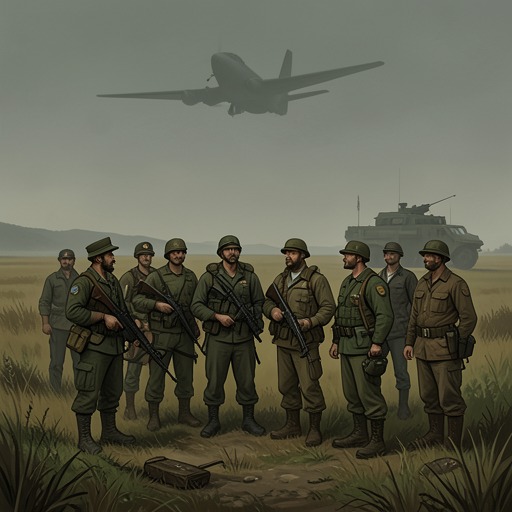
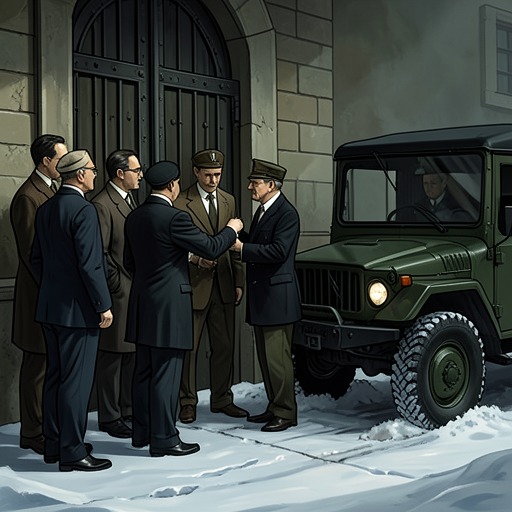
At an emergency meeting with Icelandic ministers, the American general presented the treaty as authority for monitoring activity within and around Iceland’s borders for military purposes, using submarines, reconnaissance aircraft, and satellites. He said that satellite imagery had recently revealed a German aircraft lost in Vatnajökull’s ice during the closing stages of the war. The United States intended to excavate the wreck and transfer it to the base before repatriating it, an undertaking that would bring substantial personnel and equipment across Icelandic territory.
The Icelandic foreign minister drew the implication the Americans had not stated: the operation required the Icelandic Government’s permission. The general promised discreet movement, described the expedition as scientific, and said that senior scientists would accompany the military personnel. The admiral insisted that the United States did not wish to act against Iceland’s will. But the insistence on secrecy, including the demand that nothing said in the meeting leave the room, sat uneasily beside the request for cooperation and the claim that the matter should not involve outsiders.
When the prime minister pressed for an explanation of the plane and its sensitivity, the general abruptly answered that it was not Iceland’s concern. The prime minister objected that the Americans had not requested permission but had merely announced their plans. If the operation was already under way, he warned, it could constitute a serious breach of the defence treaty. The exchange makes the treaty’s practical limit plain: American officials could invoke shared defence responsibilities, but the Icelandic Government did not accept that those responsibilities erased its authority over military activity on Icelandic soil.
Secrecy, Leverage, and Sovereignty
The withheld explanation concerned the wreck’s cargo. In a separate briefing, Carr raised the Walchensee gold: more than three hundred small bags, each containing a gold bar, had been sent from the Reichsbank toward the Alps shortly before the fall of Berlin, on Hitler’s personal orders. He told the defense secretary that much of the gold had been taken from concentration camps. The secretary recognized the implication that the aircraft might contain plundered Jewish gold. The disclosure gives the secrecy surrounding the wreck a grave historical dimension, even as Iceland’s ministers are being asked to accept a military operation without a full account of what it involves.
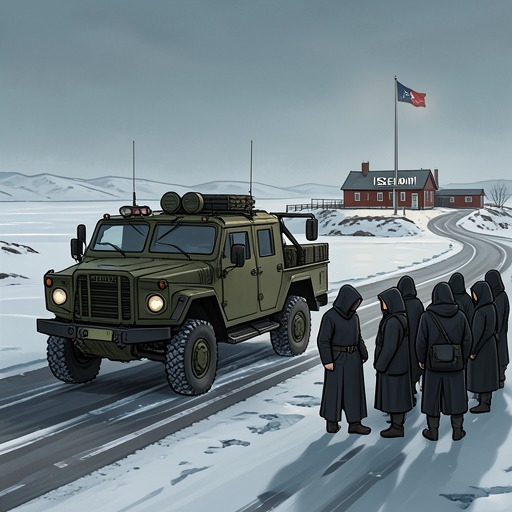
The conflict sharpened after members of the rescue team were endangered on the glacier. The prime minister said that the Icelandic Government had no authority over the team and could not simply order it to stop; with sufficient warning, the government could have closed the area to traffic, but the Americans had not provided that warning. The general replied that the United States could not be held responsible for the rescuers’ welfare and invoked the share of Iceland’s national income derived directly or indirectly from the American presence. The appeal turned economic dependence into pressure at the moment Iceland was asserting its authority.
The prime minister answered with measures of his own: a formal protest, demands for thorough public investigations in Iceland and the United States, closure of the roads between the glacier and the base until the government received full and accurate disclosure, and a personal address to the nation. As he gathered his papers and closed his briefcase, the general disclosed that an old German bomb was on the glacier and that specialists were trying to remove it. The warning recast secrecy as protection against catastrophe, but did not settle the prior question of who had the authority to begin and control the operation. In the episode, emergency language and treaty language compete: each side presents its actions as necessary, while the Icelandic Government insists that necessity cannot substitute for consent.